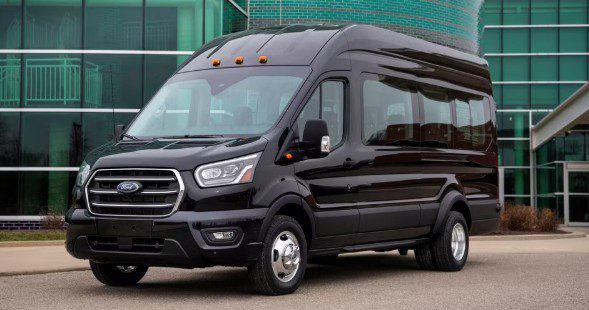
New 2027 Ford E-Transit Cargo Van Specs, Price & Colors – The 2027 Ford E-Transit Cargo Van continues its reign as the most popular electric work van in the United States, providing a “Professional Grade” solution for businesses aiming to slash fuel costs without sacrificing utility. As the logistics industry shifts toward electrification, the 2027 model year focuses on the “Extended Range” battery and enhanced charging speeds that were recently introduced, now fully integrated as the benchmark for reliability. For American small businesses and global fleets alike, the E-Transit remains the most versatile tool for the modern last-mile delivery landscape.
The 2027 Ford E-Transit Cargo Van is the cornerstone of the Ford Pro™ ecosystem, designed to help businesses transition to zero-emission operations with ease. Unlike startups that have struggled with scale, Ford utilizes its century of manufacturing expertise to deliver a van that is as durable as its legendary gas-powered predecessors. In the United States, where urban delivery routes are becoming more demanding, the 2027 E-Transit offers a refined driving experience, a sophisticated digital cockpit, and the mechanical flexibility to serve as anything from a refrigerated delivery vehicle to a mobile repair shop.

What’s New for 2027 Ford E-Transit Cargo Van
While the 2027 model year is part of a mature generation, it standardizes several high-productivity upgrades:
-
Standardized 89 kWh Battery: The “Extended Range” battery is now the cornerstone of the lineup, offering up to 159 miles of range on a single charge—more than double the daily average for most U.S. delivery routes.
-
Dual Onboard Chargers: Charging is faster than ever with standard dual onboard chargers that allow for 22% faster Level 2 charging when paired with Ford Pro’s 80-amp series chargers.
-
BlueCruise Capabilities: Advanced hands-free highway driving is increasingly available on high-roof configurations, reducing driver fatigue during inter-city transit.
-
Next-Gen NACS Port: The 2027 model natively adopts the North American Charging System (NACS) port, allowing for seamless access to the Tesla Supercharger network without adapters.
What make this trims special?
The 2027 Ford E-Transit Cargo Van is unique because it offers an uncompromised load area. Because the battery is tucked beneath the chassis, the interior dimensions are identical to the gasoline-powered Transit. This makes it a “unicorn” in the EV world; businesses can use the same shelves, bins, and upfits they’ve used for years. Additionally, the Pro Power Onboard system (providing 2.4 kW of exportable power) turns the van into a mobile generator, allowing contractors to run power tools or refrigeration units directly from the vehicle’s high-voltage battery.
2027 Ford E-Transit Cargo Van Redesign
The 2027 redesign focuses on “Stealth Efficiency,” maintaining the classic Transit silhouette with modern electric cues.
-
Aerodynamic Grille: The signature three-bar grille features blue accents and a blocked-off design to improve airflow and efficiency.
-
Lighting Signature: Updated LED headlamps provide a brighter, more focused beam for early-morning or late-night delivery shifts.
-
Lightweight Materials: Extensive use of high-strength, lightweight materials in the rear doors and body panels helps offset the battery weight to maximize payload.
-
Low-Step Entry: The floor height remains low for easy ingress and egress, a critical feature for delivery drivers who may enter and exit the vehicle 100 times a day.
What Difference This Trim and Others
Choosing the Cargo Van over the Cutaway or Chassis Cab configurations depends on your operational needs:
-
vs. Cutaway/Chassis Cab: The Cargo Van comes fully enclosed from the factory, offering the highest level of security and weather protection for goods. The Cutaway is intended for custom box or ambulance bodies.
-
vs. Gasoline Transit: The E-Transit offers instantaneous torque (317 lb-ft) that makes it significantly quicker off the line, especially when fully laden, and features a much quieter cabin.
-
vs. E-Transit Custom: The standard E-Transit is a “2-tonne” van, offering much higher roof options and nearly 40% more cargo volume than the European-spec “Custom” model.
2027 Ford E-Transit Cargo Van Interior, Features & Tech
The interior of the 2027 E-Transit is a masterclass in the “Mobile Office” concept.

-
12.0-inch SYNC® 4 Screen: A massive landscape-oriented touchscreen is standard, providing access to Ford Pro™ E-Telematics to help managers track range and charging status in real-time.
-
Intelligent Navigation: The system automatically calculates the most efficient route based on current battery levels and available charging stations.
-
Comfort Suite: Standard features include semi-automatic climate control, a heated driver’s seat, and a heated windshield—essential for cold-weather U.S. climates.
-
Digital Gauge Cluster: A high-resolution screen replaces traditional needles, providing clear data on “miles-to-empty” and regenerative braking efficiency.
Safety features & Driver Assistance
The 2027 Ford E-Transit includes the Ford Co-Pilot360® suite as standard equipment:
-
Pre-Collision Assist with AEB: Automatically applies brakes if a collision with a vehicle or pedestrian is imminent.
-
Lane-Keeping System: Helps prevent the van from drifting out of its lane during long highway stretches.
-
360-Degree Camera: A “must-have” for high-roof models, providing a bird’s-eye view to help navigate tight urban loading zones.
-
Reverse Brake Assist: Can detect objects and pedestrians behind the van and stop the vehicle before an impact occurs.
2027 Ford E-Transit Cargo Van Performance & Specs
| Feature | 2027 E-Transit Specification |
| Powertrain | Rear-Wheel Drive Electric Motor |
| Horsepower | 266 hp |
| Torque | 317 lb-ft |
| Battery Capacity | 89 kWh (Usable) |
| Max Payload | ~3,300 to 3,800 lbs (Configuration dependent) |
| Max Range | 159 Miles (EPA Estimated) |
| Fast Charging | 10% to 80% in ~28 minutes (at 180kW DC) |
2027 Ford E-Transit Cargo Van Pros & Cons
Pros:
-
Proven Platform: Uses the same interior dimensions and upfit points as the gas Transit.
-
Low Running Costs: Drastically reduced maintenance (no oil changes) and lower energy costs per mile.
-
NACS Access: Access to the Tesla Supercharger network is a major competitive advantage.
Cons:
-
Limited Highway Range: While 159 miles is great for cities, it is not ideal for long-distance interstate hauling.
-
Upfront Cost: Higher initial purchase price compared to a base diesel or gas Transit (though offset by incentives).
Should You Consider It?
The 2027 Ford E-Transit Cargo Van is the definitive choice for businesses with “depot-based” operations. If your vans return to a central location every night to charge and their daily routes are under 150 miles, the E-Transit will save your business thousands of dollars in operating costs over its lifespan. It is the premier tool for urban delivery, mobile service technicians, and tradespeople who want to future-proof their fleet.
2027 Ford E-Transit Cargo Van Price & Release Date
The new E-Transit Cargo Van is expected to hit U.S. showrooms in Fall 2026. Estimated starting MSRP for the Cargo Van configuration is approximately $53,500 for the low-roof models, with high-roof and extended-length versions reaching into the $60,000 range. These prices do not include the significant federal and state tax credits available for commercial electric vehicles.
The 2027 Ford E-Transit Cargo Van proves that the future of work is electric. By standardizing the extended-range battery and the NACS charging port, Ford has addressed the two biggest concerns of fleet managers: range and infrastructure. It remains a “Professional Grade” workhorse that happens to be an EV, offering a quiet, powerful, and intelligent way to keep American businesses moving. For 2027, the E-Transit isn’t just an alternative—it’s the new standard for the American road.