New 2027 Ford Escape Plug-in Hybrid Specs, Review & Range – The American automotive landscape is in the midst of an electrification revolution, but for many families, the range anxiety of a full Electric Vehicle (EV) remains a significant hurdle. Enter the Plug-in Hybrid Electric Vehicle (PHEV). The 2027 Ford Escape Plug-in Hybrid sits perfectly in this sweet spot, offering enough battery-powered range to handle the daily school run and commute on pure electricity, while retaining a gas engine for carefree cross-country road trips. Facing fierce competition from the Toyota RAV4 Prime and Hyundai Tucson PHEV, the 2027 Escape PHEV leverages Ford’s latest technology and a massive mid-cycle upgrade to solidify its position as the most tech-forward, efficient, and driver-friendly compact SUV in the United States.
What’s New for 2027 Ford Escape Plug-in Hybrid
Because the Escape lineup received a massive interior and exterior overhaul for the 2025 model year, the 2027 Escape Plug-in Hybrid arrives with highly targeted upgrades focused on fixing the previous model’s biggest (pain points). The most significant upgrade for 2027 is a massive leap in charging speed. Ford has finally ditched the sluggish 3.3 kW onboard charger in favor of a standard 7.2 kW Level 2 charger, cutting plug-in times nearly in half.

Additionally, Ford has introduced a next-generation, higher-density lithium-ion battery pack. This new battery pushes the estimated all-electric range from 37 miles up to a class-competitive 42 miles. The 2027 model also benefits from a faster infotainment processor running the latest SYNC 5 software, and standard BlueCruise hands-free driving technology on upper trim levels, ensuring the Escape PHEV remains on the cutting edge of driver assistance.
What make this trims special?
The Escape PHEV is special because it completely removes the traditional compromises associated with alternative fuel vehicles. Unlike standard hybrids which rely heavily on their gas engines, or full EVs which require route planning around charging stations, the PHEV operates as two vehicles in one.
What makes the Ford unique in this segment is its drivetrain architecture. The Escape PHEV utilizes a power-split setup that is permanently paired with an electric motor driving the rear axle. This means that even when the gas engine kicks in after the battery is depleted, the Escape PHEV operates as a standard all-wheel-drive vehicle, providing excellent all-weather traction for American buyers dealing with snow or rain, without the mechanical complexity of a traditional transfer case.
2027 Ford Escape Plug-in Hybrid Redesign
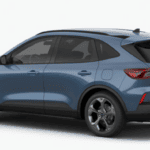
The 2027 Escape Plug-in Hybrid carries forward the sleek, fastback-like profile introduced in the 2025 redesign, but receives subtle aero-focused tweaks to maximize efficiency. The front fascia features a slightly reshaped lower intake that reduces aerodynamic drag, directly contributing to the extended electric range.
The lighting signatures have been updated with sequential LED turn signals on both the front and rear, adding a premium flair. The most noticeable visual change for the PHEV are the newly designed 19-inch aero-optimized wheels. These wheels feature intricate closed spoke designs that trick the air into flowing smoothly over the brakes, further reducing wind resistance. Ford has also added a unique “Charge Blue” accent stitching inside and out to subtly identify the plug-in variant.
What Difference This Trim and Others
To understand the Escape PHEV, you must look at how it contrasts with the rest of the Ford SUV hierarchy:
- Vs. Gas 1.5L and 2.0L Escapes: The gas models are lighter and offer traditional long-range capability, but they lack the instant electric torque, the silent startup, and the ability to bypass the gas pump entirely for daily driving.
- Vs. ST-Line and ST-Line Elite: These trims are focused on sporty aesthetics and internal combustion performance. The PHEV prioritizes efficiency and technology, trading aggressive styling cues for aero-optimized bodywork.
- Vs. Full EVs (Mustang Mach-E): The Escape PHEV is significantly cheaper than a full EV, requires no lifestyle changes regarding charging infrastructure, and is generally lighter and more efficient on long highway trips where aerodynamic drag drains EV batteries.
2027 Ford Escape Plug-in Hybrid Interior, Features & Tech
The interior of the 2027 Escape Plug-in Hybrid is a masterclass in blending digital integration with traditional ergonomics. The focal point is the massive 13.2-inch vertical touchscreen that runs the lightning-fast SYNC 5 software with built-in Google Automotive services.
However, the true genius of the Escape’s cabin is what lies beneath the screen. Ford smartly retains a row of physical toggle switches for the climate control and volume knob. In a segment where competitors force you to dig through digital menus just to change the temperature, Ford’s decision is a massive victory for daily usability. The cabin also features a unique digital driver information screen that includes a sophisticated energy flow monitor, allowing drivers to see exactly when the gas engine is assisting and when the vehicle is running on pure electricity.

Safety features & Driver Assistance
Safety technology in the 2027 Ford Escape Plug-in Hybrid is comprehensive. The vehicle comes standard with Ford Co-Pilot360, encompassing automatic emergency braking with pedestrian detection, blind-spot monitoring, lane-keeping assist, and rear cross-traffic alert.
The standout feature for 2027 is the standard inclusion of BlueCruise 1.3 on the PHEV lineup. This hands-free driving system utilizes infrared cameras to monitor the driver’s eye movements, allowing for true hands-free driving on over 130,000 miles of pre-mapped US highways. An intelligent 360-degree camera system is also available, providing a bird’s-eye view that is incredibly useful when maneuvering in tight urban parking garages.
2027 Ford Escape PHEV Performance & Specs
The 2027 Ford Escape Plug-in Hybrid utilizes a highly efficient, updated powertrain tailored for the American commute.
- Engine: 2.5L Atkinson-Cycle Inline-4 + Electric Motor
- Combined Output: 230 horsepower (estimated bump from previous 212 hp)
- Torque: 215 lb-ft
- Transmission: e-CVT (Electronic Continuously Variable Transmission)
- Drivetrain: Electronic All-Wheel Drive (AWD) standard
The new high-density battery pack provides an estimated 42 miles of all-electric range on a single charge—enough to cover the average American daily commute without burning a drop of gas. When the battery is depleted, the Escape PHEV seamlessly transitions to hybrid mode, achieving an estimated 38 mpg combined.
Most importantly, the new 7.2 kW Level 2 charger allows the battery to be replenished from 0% to 100% in approximately 2.5 hours, meaning you can top off the battery while grocery shopping or eating lunch. Towing capacity remains steady at 1,500 pounds.
2027 Ford Escape Plug-in Hybrid Pros & Cons
Pros:
- 7.2 kW Charging: Finally fixes the previous model’s agonizingly slow charging times.
- 42-Mile EV Range: Covers the vast majority of daily driving on battery power alone.
- Physical Climate Controls: A massive ergonomic win over competitors like the Hyundai Tucson PHEV.
- Standard AWD: Provides excellent all-weather confidence without a heavy mechanical transfer case.
Cons:
- Reduced Cargo Space: The battery pack eats into the under-floor storage, resulting in less trunk space than the gas-powered Escape.
- Engine Noise: When the battery is depleted and you accelerate hard onto the highway, the 2.5L gas engine can sound a bit raspy under heavy load.
- Price Premium: The PHEV carries a significant price hike over a base gas Escape, requiring years of fuel savings to recoup the cost if you don’t charge regularly.
Should You Consider It?
You should absolutely consider the 2027 Ford Escape Plug-in Hybrid if you have a short daily commute (under 40 miles round trip) and have access to a Level 2 charger at home or work. It is the ultimate “best of both worlds” vehicle, allowing you to commute silently and cheaply from Monday to Friday, while retaining the ability to load up the family and drive from New York to Florida without waiting at charging stations.
However, you should look elsewhere if you do not have a reliable way to plug in the vehicle at night. If you rely solely on gas, you are simply dragging around 400 pounds of dead battery weight, resulting in worse fuel economy than a standard hybrid. Additionally, if maximum cargo volume for large dogs or oversized strollers is your top priority, the standard gas Escape or a Honda CR-V will serve you better.
2027 Ford Escape Plug-in Hybrid Price & Release Date
Price: Because plug-in technology carries a premium, the new Ford Escape Plug-in Hybrid is expected to start right around the $40,500 mark. Because AWD and the fast 7.2 kW charger are standard, there are fewer mandatory add-on packages. A fully loaded model with BlueCruise, a premium B&O audio system, and a panoramic roof will likely top out around $46,500. (Note: This vehicle may still qualify for the $3,750 Federal EV Tax Credit, depending on final assembly and battery sourcing).
Release Date: Ford traditionally begins producing its next model-year vehicles in late summer. The 2027 Escape Plug-in Hybrid is expected to be officially revealed in the summer of 2026, with vehicles arriving at US dealerships nationwide by September or October of 2026.
The 2027 Ford Escape Plug-in Hybrid represents the maturation of the plug-in hybrid segment. By addressing the previous generation’s biggest flaws—namely the slow charging speed and middling EV range—Ford has created an incredibly compelling daily driver. It perfectly marries the latest in hands-free highway technology with the sensible, ergonomic interior design that families crave. For American buyers ready to dip their toes into electrification without fully committing to a battery-only vehicle, the 2027 Escape Plug-in Hybrid stands out as one of the smartest, most refined choices on the market.